
Choosing a digital marketing course is not always easy. Different academies offer different modules, tools, training methods, and career support.
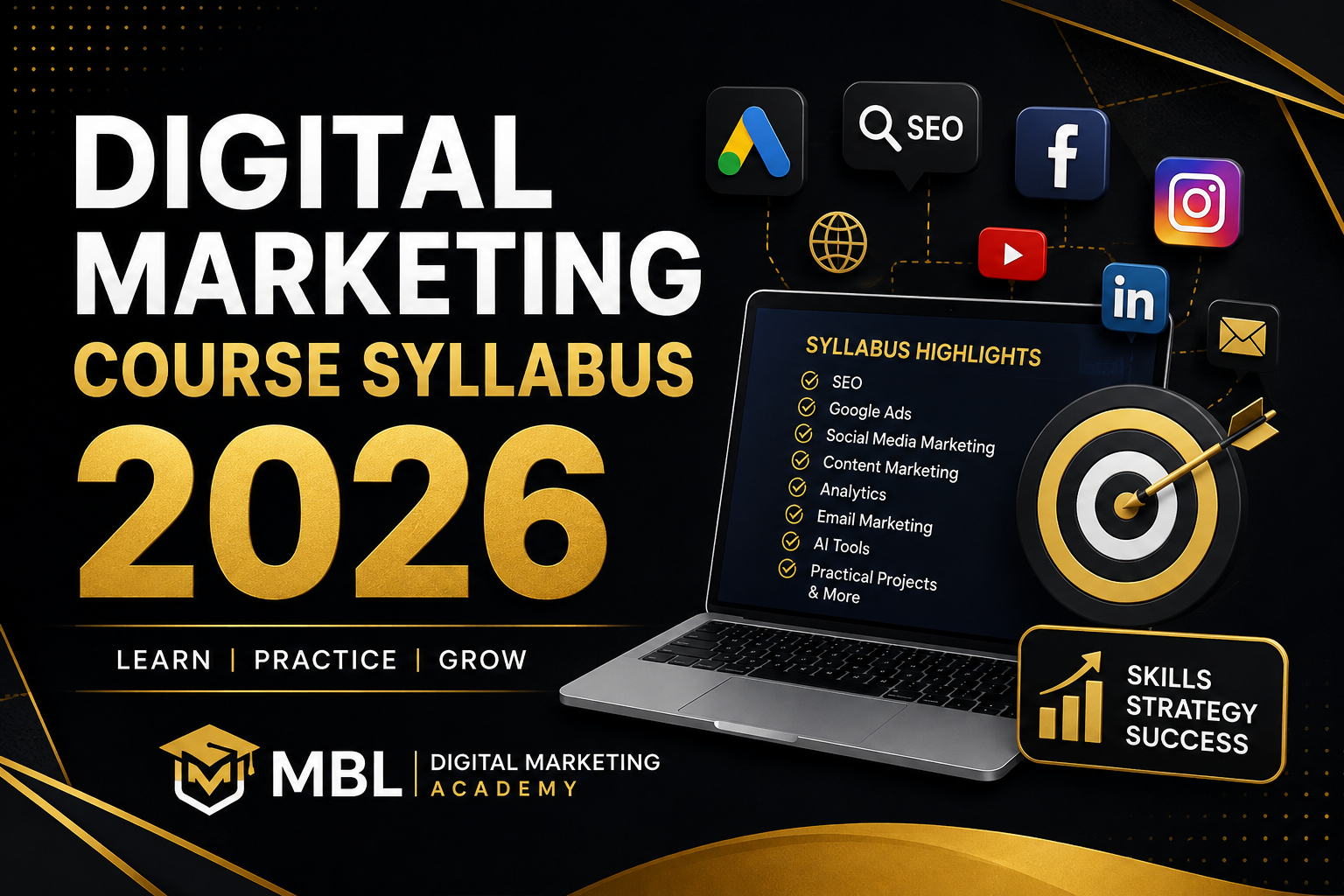
If you are searching for a digital marketing course in Hyderabad, don’t make your decision only by looking at the number of topics in the syllabus. A longer syllabus does not automatically mean better training.
The real question is:
Will this course help me learn digital marketing and actually use those skills?
A well-designed course should combine basic concepts with practical training, industry tools, projects, analytics, AI, and career preparation. Students exploring MBL Digital Marketing Academy can also use these points to understand what a useful course should offer.
What Makes a Good Digital Marketing Course?
Digital marketing has several different areas. A beginner-friendly course should introduce the major channels while giving students enough time to practice them.
Here are some important areas students should look for.
1. Digital Marketing Basics
Before jumping into individual platforms, students need to understand how digital marketing works as a whole.
The fundamentals can include:
- Digital marketing channels
- Target customers
- Buyer personas
- Customer journey
- Marketing funnels
- Lead generation
- Conversions
- Customer acquisition
These basics help students understand why a business chooses SEO, social media, paid advertising, or another channel.
2. Search Engine Optimization (SEO)
SEO should be an essential part of a modern digital marketing syllabus.
Students should get an understanding of:
- Keyword research
- Search intent
- On-page SEO
- Technical SEO
- Off-page SEO
- Content optimization
- Internal linking
- Backlink basics

Practical exposure to tools such as Google Search Console, Google Analytics, SEMrush, Ahrefs, and Ubersuggest can make the learning process more useful.
The important thing is not simply knowing the names of these tools. Students should understand how they can be used for actual marketing work.
3. Google Ads
Paid search is another important skill for aspiring digital marketers.
A useful Google Ads module should cover areas such as:
- Campaign planning
- Keyword research
- Match types
- Negative keywords
- Ad writing
- Audience selection
- Budget management
- Conversion tracking
- Quality Score
- Search term analysis
- Campaign optimization

Students should learn how to connect advertising decisions with business goals instead of treating Google Ads as just a platform for creating advertisements.
4. Meta Ads
Facebook and Instagram advertising can be valuable for businesses looking to build awareness, generate leads, or drive conversions.
Students can learn about:
- Campaign objectives
- Audience research
- Custom audiences
- Lookalike audiences
- Creative selection
- Placements
- Lead generation
- Retargeting
- Campaign performance

Hands-on exercises can help students understand why different audiences, creatives, and offers can produce different results.
5. Social Media and Content Marketing
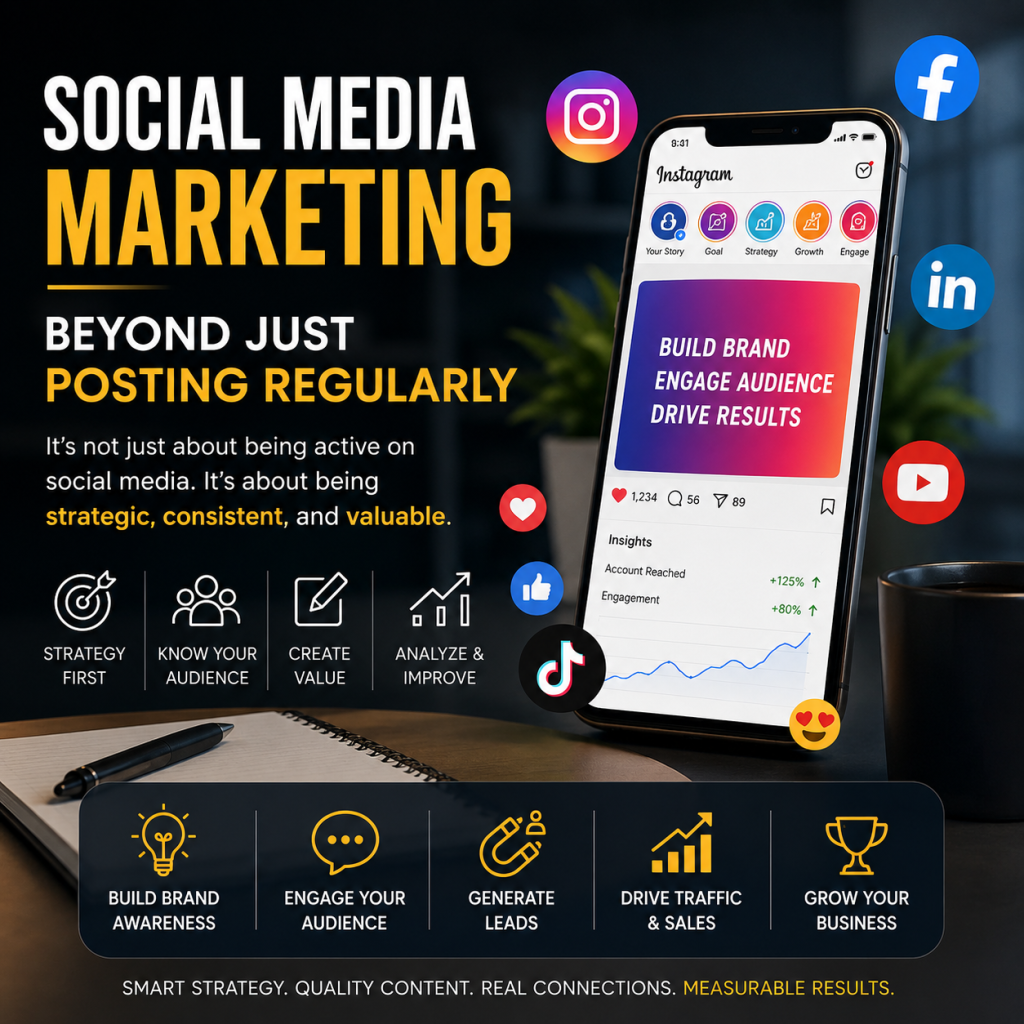
Social media marketing is much more than uploading posts every day.
Students should understand how to create a proper social media strategy through:
- Content planning
- Content pillars
- Content calendars
- Reels and Stories
- Audience research
- Engagement
- Social media insights
- Blog content
- SEO content
- Video content
- Storytelling

The objective should be to create content that serves a purpose, whether that is awareness, engagement, traffic, leads, or sales.
6. Websites, Analytics and Tracking
A digital marketer doesn’t necessarily need to become a web developer, but understanding how websites support marketing is important.
Basic training can include:
- Landing pages
- Lead forms
- CTA buttons
- User experience
- WordPress basics
- Google Analytics
- Google Tag Manager
- Conversion tracking
For example, an advertisement may bring visitors to a website, but if the landing page is confusing, those visitors may not turn into leads.
Understanding this complete journey is an important digital marketing skill.
7. YouTube and Email Marketing
A well-rounded course can also introduce students to YouTube and email marketing.
For YouTube, students can learn:
- Video SEO
- Titles
- Descriptions
- Thumbnails
- Keywords
- Channel analytics
Email marketing can cover:
- Campaign planning
- Email content
- Audience segmentation
- Subject lines
- Automation basics
- Performance measurement
These channels give students additional ways to communicate with audiences and support business goals.
8. AI for Digital Marketing
AI has become an important part of the modern marketing workflow.
Students can learn to use AI for tasks such as:
- Generating content ideas
- Research assistance
- Creating ad variations
- Social media brainstorming
- Developing customer personas
- Organizing information
- Data analysis
- Campaign ideas
- Improving productivity
However, AI should be used as an assistant rather than a replacement for marketing knowledge.
Students still need to understand the audience, business objective, brand voice, and marketing strategy before using AI-generated outputs.
9. Practical Projects and Portfolio Building
Knowing theory is useful, but practical work is where students start developing confidence.
A good course should provide opportunities to work on projects such as:
- Website SEO audits
- Keyword research
- Social media plans
- Google Ads campaign structures
- Meta Ads strategies
- Content marketing assignments
- Marketing performance reports
These projects can eventually become part of a student’s portfolio.
During an interview, there is a big difference between saying “I completed a course” and being able to explain “This is the project I worked on, this was my strategy, and these were the results or learnings.”
10. Career and Interview Preparation
Technical skills are only one part of starting a digital marketing career.
Students can also benefit from guidance on:
- Resume preparation
- LinkedIn profile improvement
- Portfolio presentation
- Mock interviews
- Common interview questions
- Communication skills
- Job search strategies
Being able to explain your knowledge clearly can make interviews less stressful, especially for freshers.
Why Practical Learning Matters at MBL Digital Marketing Academy
For students considering MBL Digital Marketing Academy, it is useful to look at the learning experience rather than focusing only on the syllabus.
Digital marketing concepts become easier when students apply them to practical situations.
For example, an SEO lesson can be followed by a website analysis. A Meta Ads lesson can be connected with audience and campaign planning. Analytics becomes more meaningful when students work with marketing data.
A simple learning cycle can be:
Understand → Practice → Create → Analyze → Improve
This approach can help students gradually become more comfortable with digital marketing tasks and prepare for internships or entry-level opportunities.
How to Choose a Digital Marketing Course in Hyderabad
Before enrolling in an academy, don’t hesitate to ask a few basic questions:
- Is the syllabus current?
- How much practical training is provided?
- Are students given projects?
- Which marketing tools are covered?
- Will I have portfolio projects?
- Is career guidance available?
- Are AI tools included?
- Do the trainers have practical industry experience?
Course fees and the number of modules are important considerations, but they shouldn’t be the only deciding factors.
Look for a course that gives you a clear path from understanding a concept to applying it in a practical situation.
Who Can Learn Digital Marketing?
Digital marketing can be learned by people from different educational and professional backgrounds.
It can be useful for:
- College students
- Freshers
- Working professionals
- Entrepreneurs
- Freelancers
- Business owners
- Career changers
- Marketing professionals
You don’t need advanced coding skills to begin. Curiosity, communication, creativity, analytical thinking, and a willingness to practice can be valuable qualities for a digital marketing learner.
What Can You Do After Learning Digital Marketing?
Once you build a strong foundation and gain practical experience, you can explore different roles such as:
- Digital Marketing Executive
- SEO Executive
- SEO Analyst
- Social Media Executive
- PPC Executive
- Performance Marketing Executive
- Content Marketing Executive
- Google Ads Specialist
- Meta Ads Specialist
- Digital Marketing Analyst
Your career path can later develop based on your interests and experience.
Final Thoughts
A good digital marketing course syllabus in 2026 should not be judged by how many topics are listed on a brochure.
What matters is whether the course helps you understand marketing, use industry tools, work on projects, read data, explore AI, build a portfolio, and prepare for the workplace.
If you are comparing digital marketing academies in Hyderabad, look carefully at the training approach, practical exposure, projects, tools, trainers, and career support along with the syllabus.
Remember:
The best course is not necessarily the one with the longest syllabus. It is the one that helps you turn what you learn into practical skills.
Frequently Asked Questions
What should a digital marketing course include in 2026?
A good course should generally cover digital marketing basics, SEO, Google Ads, Meta Ads, social media, content marketing, analytics, tracking, AI tools, practical projects, and career preparation.
Is practical training necessary for digital marketing?
Yes. Practical assignments and projects help students understand how marketing concepts work beyond classroom theory.
Should students learn AI tools?
Yes. AI can help with research, content ideas, analysis, and productivity. However, students should develop their own marketing understanding instead of depending entirely on AI.
Can I get a digital marketing job with only a certificate?
A certificate can demonstrate course completion, but employers may also consider practical skills, projects, portfolio work, communication, and knowledge of marketing tools.
How can I choose a digital marketing academy in Hyderabad?
Compare the syllabus, trainer experience, practical sessions, projects, tools, portfolio opportunities, student support, and career guidance before making your decision.