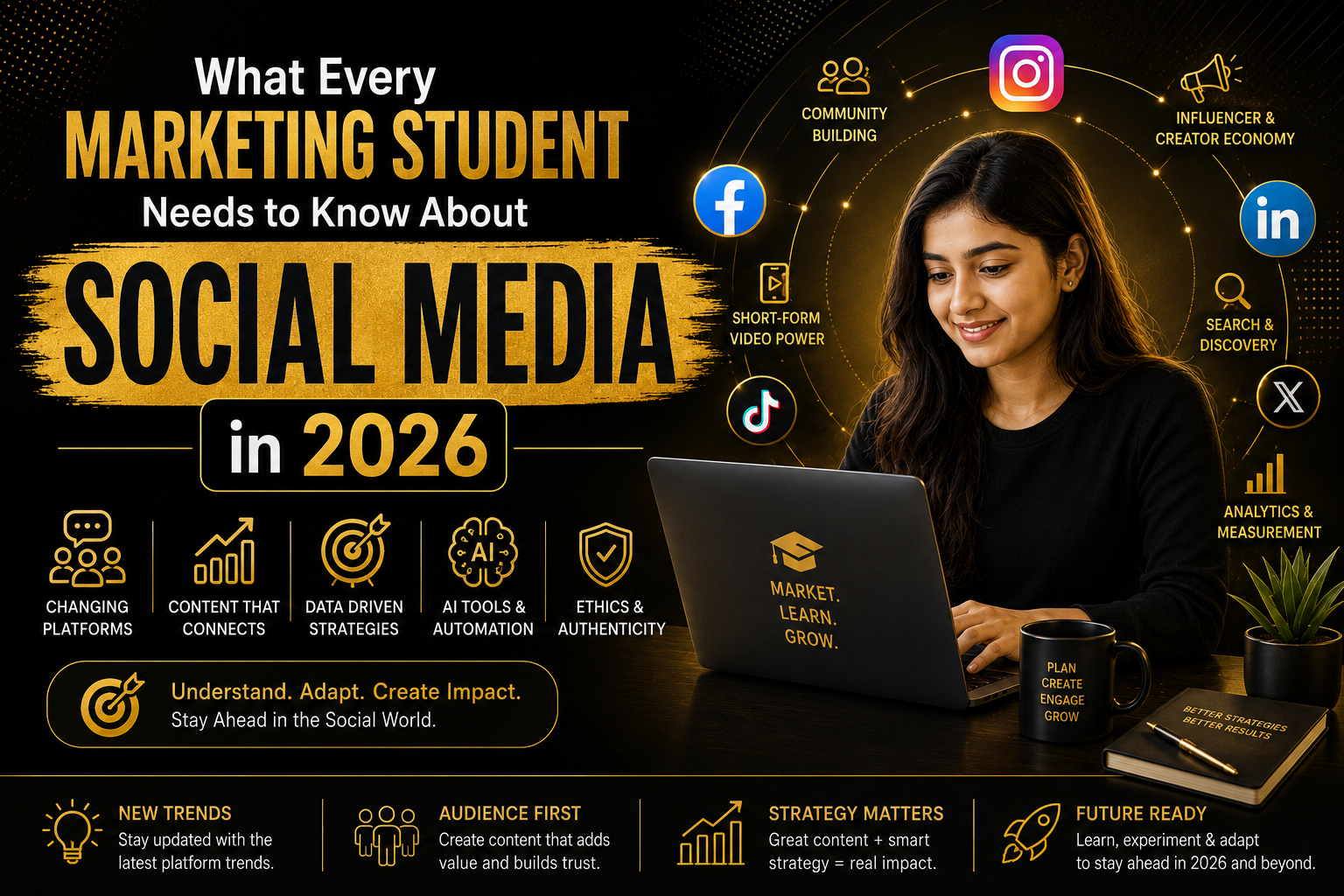
Insights from MBL Digital Marketing Academy
Getting Started
Not long ago, social media was mainly a way to stay in touch with friends and share photos. That’s
changed completely. Today, it sits at the center of how businesses grow—brands rely on Instagram,
LinkedIn, YouTube, Facebook, and TikTok not just to post updates, but to build real communities, find
new customers, close sales, and keep people coming back.
Heading into 2026, things are moving quickly. Tools powered by Artificial Intelligence, the rise of
bite-sized video, hyper-personalized feeds, shopping built directly into social apps, and smarter ad
systems are all reshaping how companies talk to their audiences..
If you’re a student aiming for a career in digital marketing, keeping pace with these shifts isn’t a bonus
anymore—it’s the baseline expectation. Getting comfortable with how social platforms operate today
can open the door to roles at agencies, startups, large corporations, or even a freelance career of
your own.
MBL Digital Marketing Academy focuses on exactly this: giving students real, hands-on exposure to
the strategies and platforms companies are actually using right now, instead of theory that’s already
out of date.
Here’s a rundown of the trends that matter most for students to understand this year.
1. Marketers Now Lean on AI as a Daily Assistant
AI has moved from being a buzzword to something marketers use constantly, in ways like:
● Coming up with content ideas
● Drafting captions
● Writing ad copy
● Producing creative visuals
● Reviewing how campaigns are performing
● Forecasting customer behavior
● Automating posting schedules
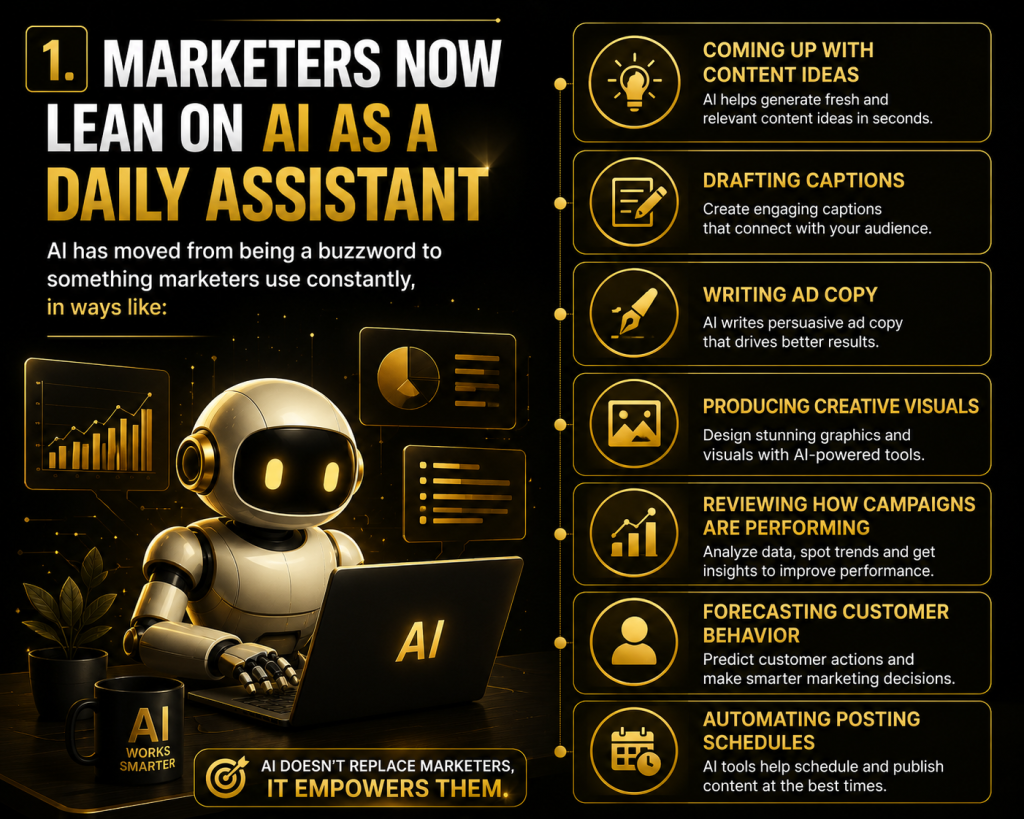
None of this replaces the marketer—it just clears space for them to focus on the parts that still need a
human touch: creativity, strategic thinking, and genuine engagement with customers.Students who learn to pair AI tools with solid marketing fundamentals will stand out clearly when
applying for jobs.
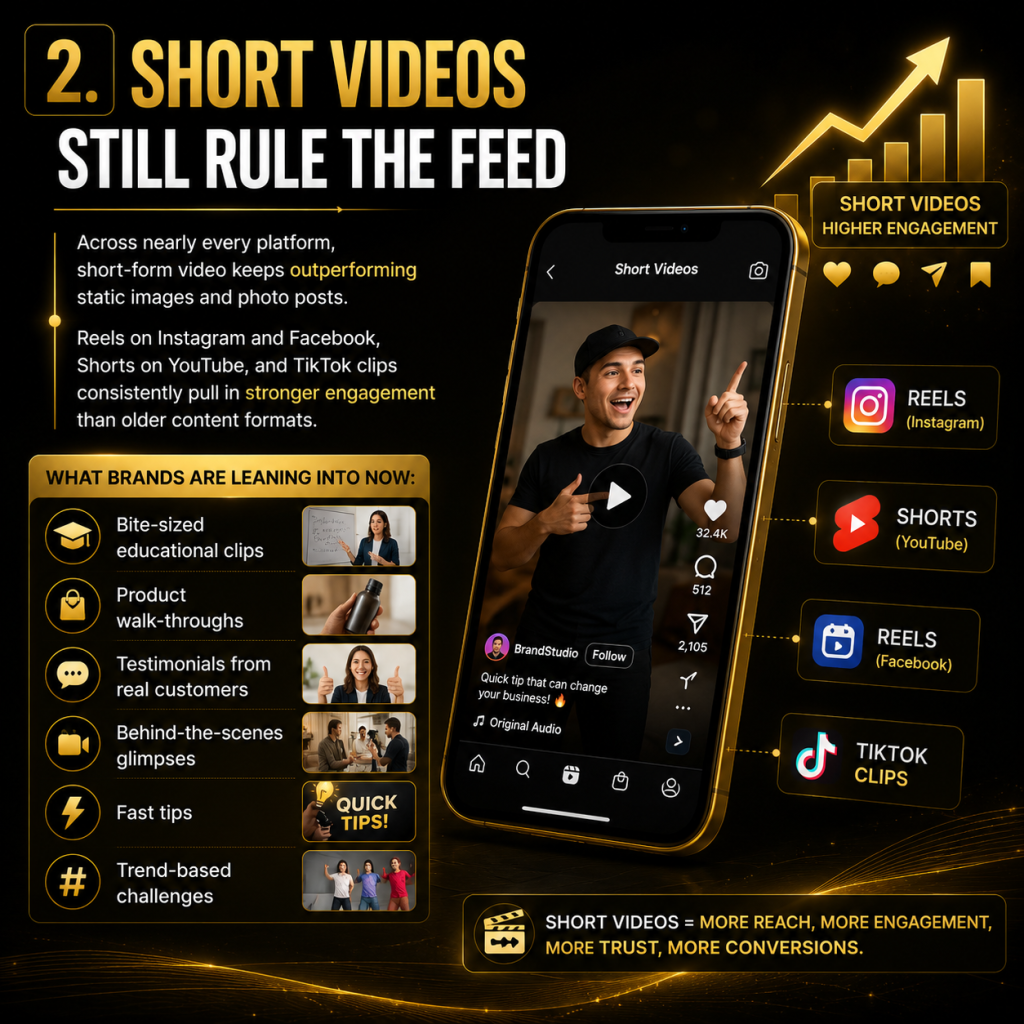
2. Short Videos Still Rule the Feed
Across nearly every platform, short-form video keeps outperforming static images and photo posts.
Reels on Instagram and Facebook, Shorts on YouTube, and TikTok clips consistently pull in stronger
engagement than older content formats.
What brands are leaning into now:
● Bite-sized educational clips
● Product walk-throughs
● Testimonials from real customers
● Behind-the-scenes glimpses
● Fast tips
● Trend-based challenges
Because of this, learning how to script, shoot, edit, and plan video content has turned into one of the
most in-demand skills a marketing student can pick up.
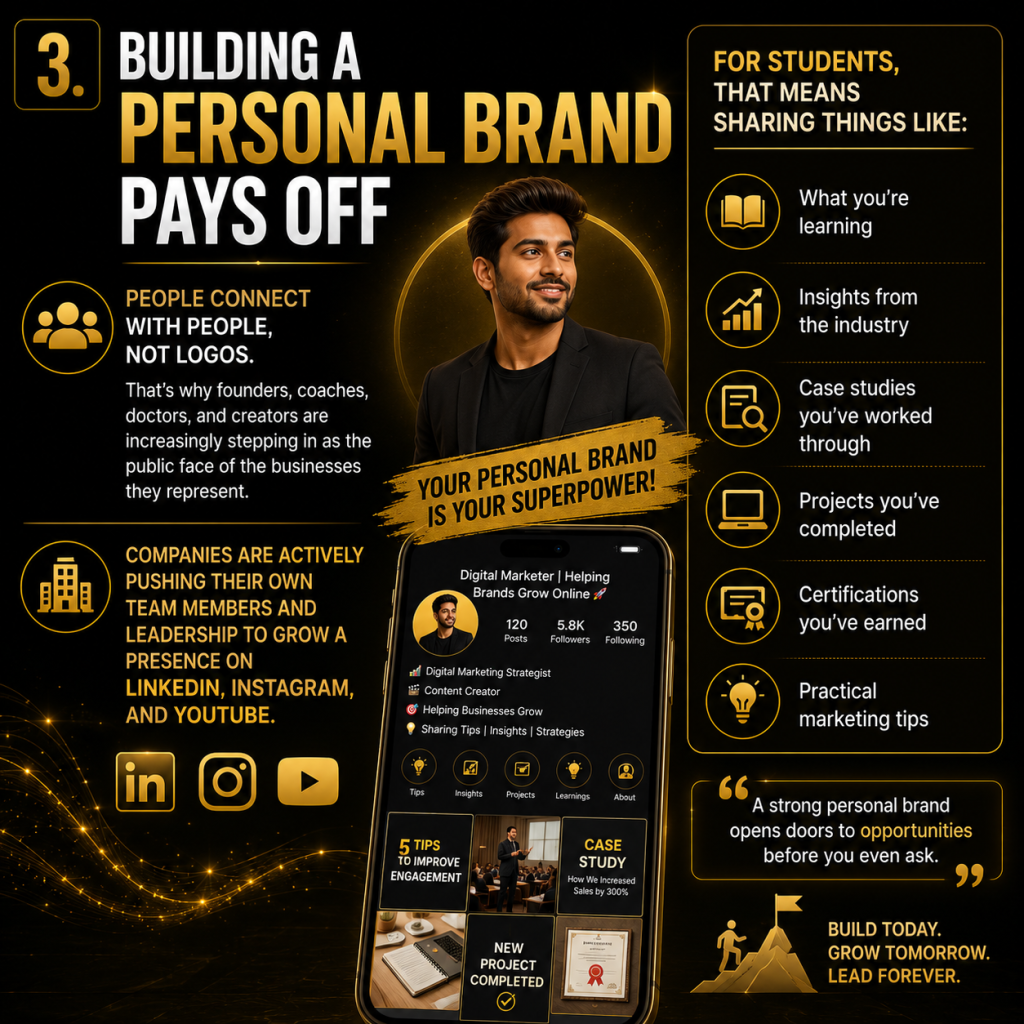
3. Building a Personal Brand Pays Off
People connect with people, not logos.
That’s why founders, coaches, doctors, and creators are increasingly stepping in as the public face of
the businesses they represent.
Companies are actively pushing their own team members and leadership to grow a presence on
LinkedIn, Instagram, and YouTube.
For students, that means sharing things like:
What you’re learning
● Insights from the industry
● Case studies you’ve worked through
● Projects you’ve completed
● Certifications you’ve earned
● Practical marketing tips
A well-built personal brand can often open more doors than a polished resume ever could.
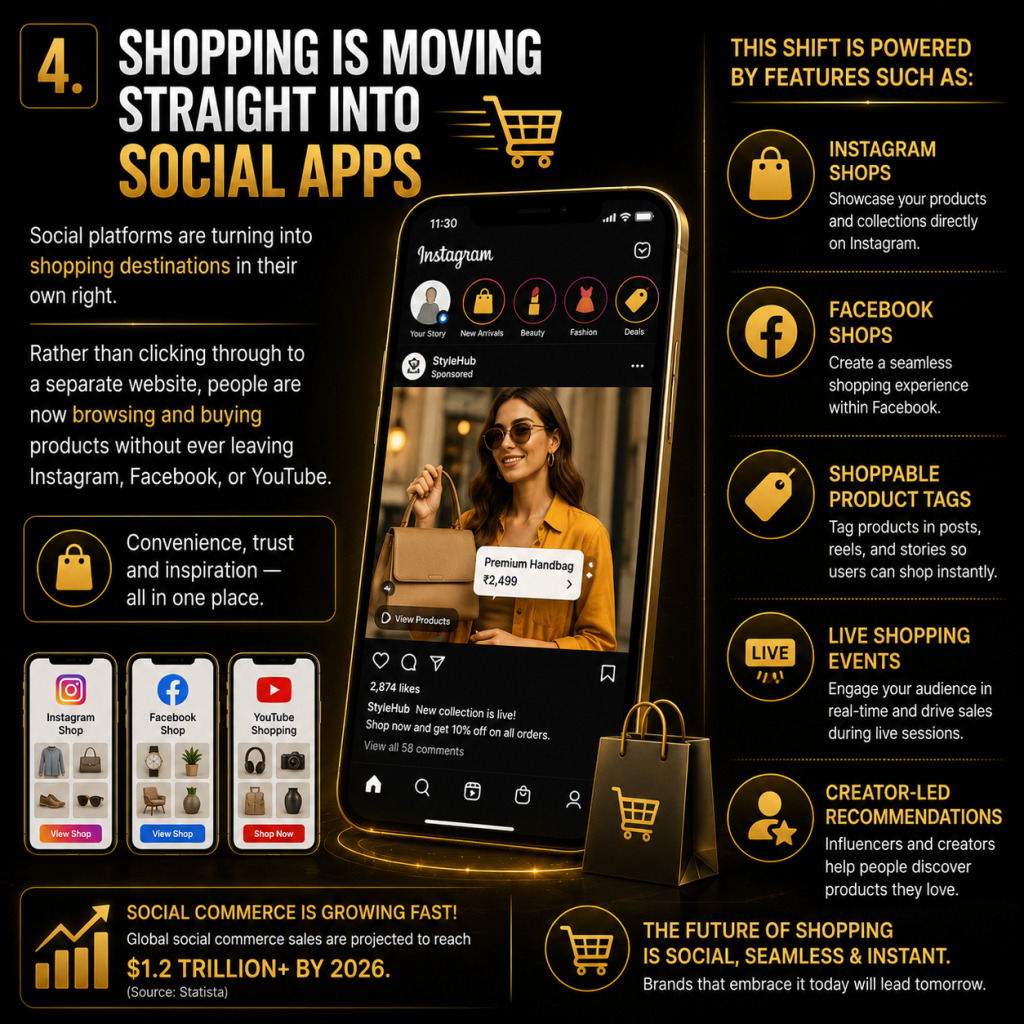
4. Shopping Is Moving Straight Into Social Apps
Social platforms are turning into shopping destinations in their own right.Rather than clicking through to a separate website, people are now browsing and buying products
without ever leaving Instagram, Facebook, or YouTube.
This shift is powered by features such as:
● Facebook Shops
● Shoppable product tags
● Live shopping events
● Creator-led recommendations
For students hoping to work with eCommerce brands, understanding how social commerce functions
is becoming essential knowledge.
5. Real Communities Matter More Than Big Follower Counts
Brands in 2026 care less about chasing follower numbers and more about cultivating audiences that
actually engage.
That means putting effort into:
● Genuine two-way conversations
● Listening to customer feedback
● Running polls
● Hosting Q&A sessions
● Live events
● Encouraging content made by followers themselves
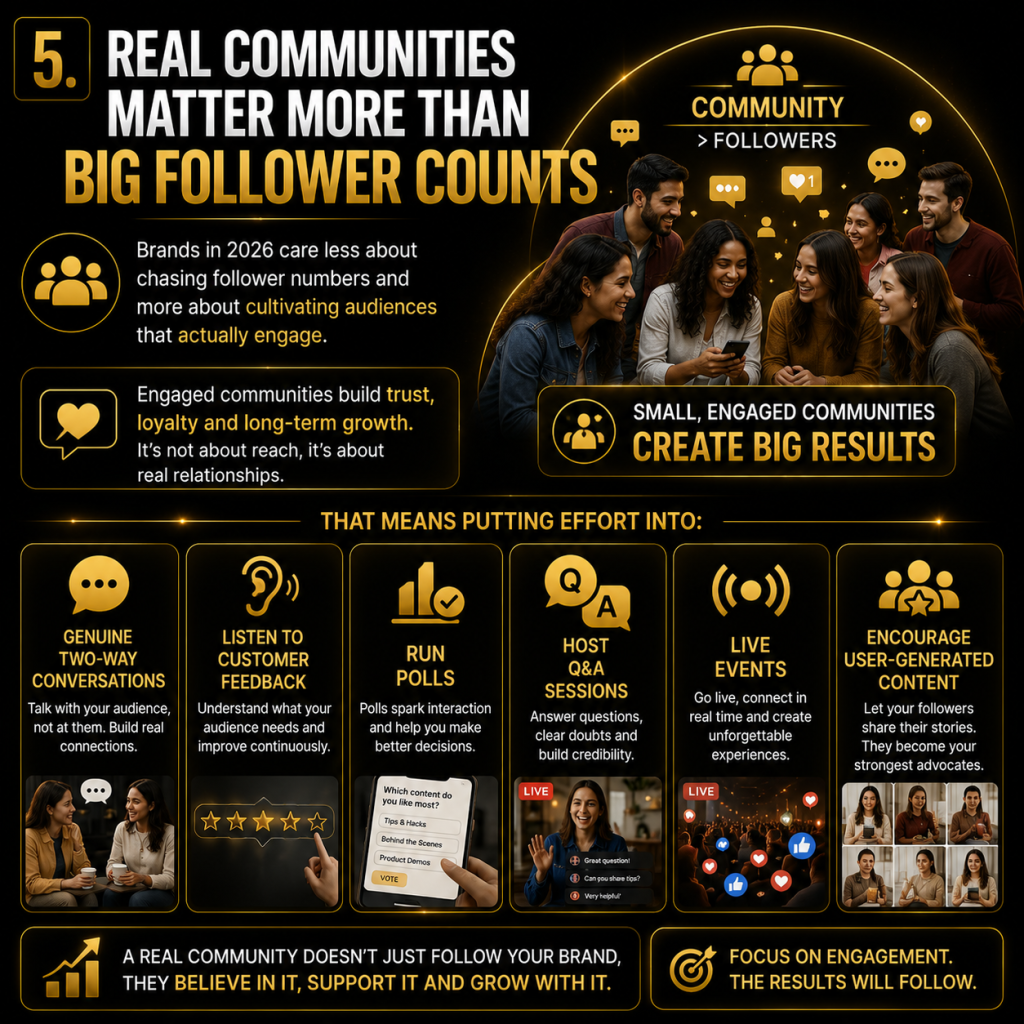
A loyal, engaged community tends to do more for a brand long-term than a large but passive following
ever will.
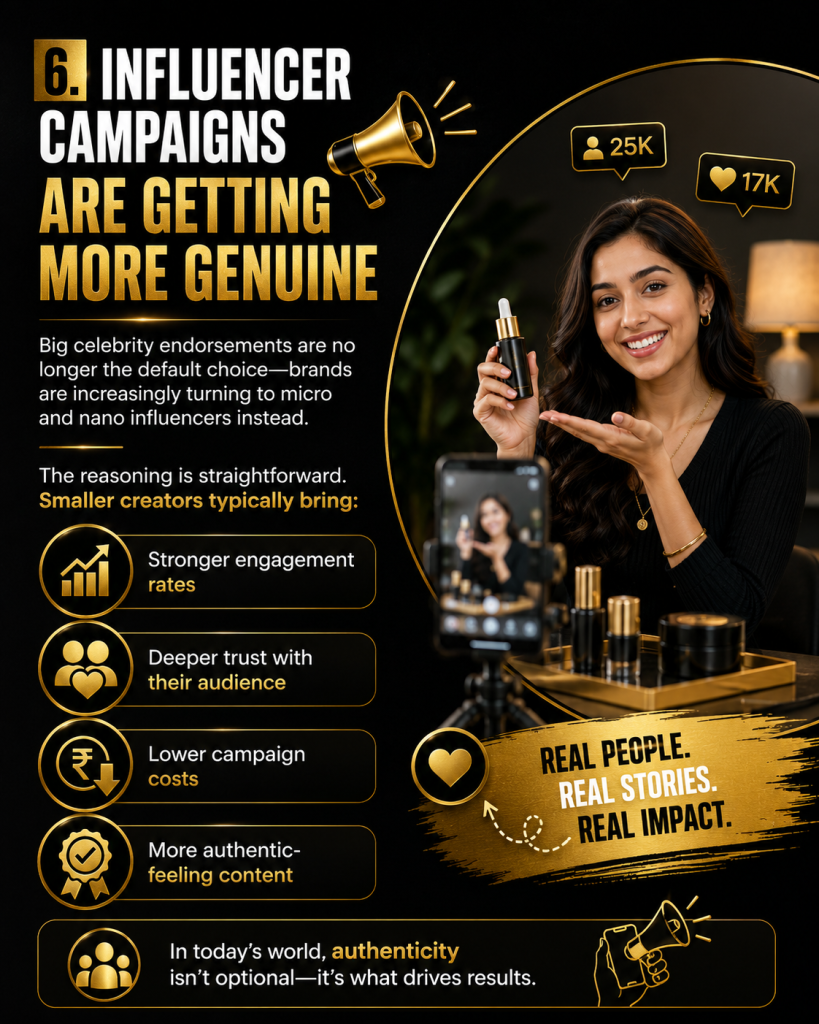
6. Influencer Campaigns Are Getting More Genuine
Big celebrity endorsements are no longer the default choice—brands are increasingly turning to micro
and nano influencers instead.
The reasoning is straightforward. Smaller creators typically bring:
● Stronger engagement rates
● Deeper trust with their audience
● Lower campaign costs
● More authentic-feeling content
Anyone wanting to work in influencer marketing should learn how to spot the right creators for a
campaign and how to actually measure whether it worked.
7. Decisions Are Driven by Data, Not Guesswork
Marketers today back up nearly every decision with real numbers rather than intuition. The key
metrics in play include:
● Reach
● Engagement rate
● Click-through rate (CTR)
● Cost per click (CPC)
● Conversion rate
● Return on ad spend (ROAS)
To work with this data effectively, students should get comfortable with platforms like:
● Meta Business Suite
● Google Tag Manager
● Meta Ads Manager
Being able to read and act on analytics is what allows campaigns to keep improving over time.
8. Paid Advertising Has Become Hard to Skip
As organic reach keeps shrinking across platforms, businesses are pouring more of their budget into
paid promotion to actually reach the people they’re targeting.
Skills worth building here include:
● Meta Ads
● Facebook lead ads
● Retargeting
● Audience targeting
● Budget optimization across campaigns
● A/B testing
Performance marketing roles remain some of the best-paid positions in the digital marketing field.
9. Content From Real Customers Builds Credibility
People generally trust what other customers say far more than what a brand says about itself.
That’s why companies actively encourage buyers to share things like:
● Reviews
● Testimonials
● Photos of the product in use
● Unboxing clips
● Personal success stories
This kind of authentic content does a lot to build trust and nudge purchase decisions—so learning
how to encourage and organize it is a genuinely useful skill.
10. LinkedIn Has Grown Into a Career-Building Platform
LinkedIn isn’t just a place to post a resume anymore. It’s now a strong platform for:
● Personal branding
● Networking
● B2B marketing
● Sharing professional insights
● Industry conversations
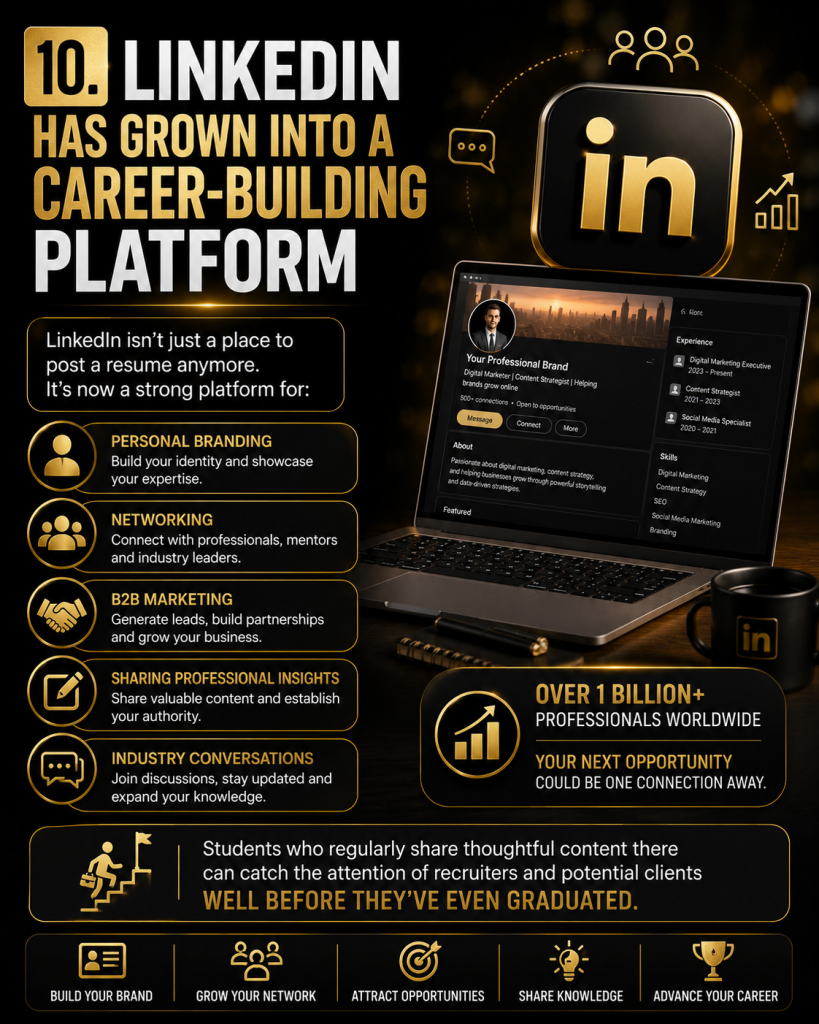
Students who regularly share thoughtful content there can catch the attention of recruiters and
potential clients well before they’ve even graduated.
11. Better Content Beats More Content
Posting constantly doesn’t guarantee results. What actually works is content that teaches something,
entertains, or solves a real problem.
The formats that tend to perform well include:
● Educational posts
● Practical industry tips
● Case studies
● Infographics
● Short videos
● Customer success stories
A single well-made post will often outperform a week of rushed, low-effort ones.
12. Search Behavior Is Shifting Onto Social Platforms
More people are now searching directly inside Instagram, YouTube, LinkedIn, and Facebook instead
of using a traditional search engine first. That makes optimizing profiles, captions, and hashtags for
search increasingly important.
Worth learning here:
● Keyword research
● Hashtag strategy
● Profile optimization
● Writing search-friendly captions
● Building content around what people are actually searching for
Getting this right helps content get discovered organically, without depending entirely on ad spend.
Skills Worth Building
Students aiming to succeed in this field should focus on developing:
● Content strategy
● Content writing
● Canva-based design
● Video editing
● Instagram, Facebook, LinkedIn, and YouTube marketing
● Meta Ads and Google Ads
● Google Analytics 4 and Google Tag Manager
● Copywriting
● AI marketing tools
● Social media analytics
● Performance marketing
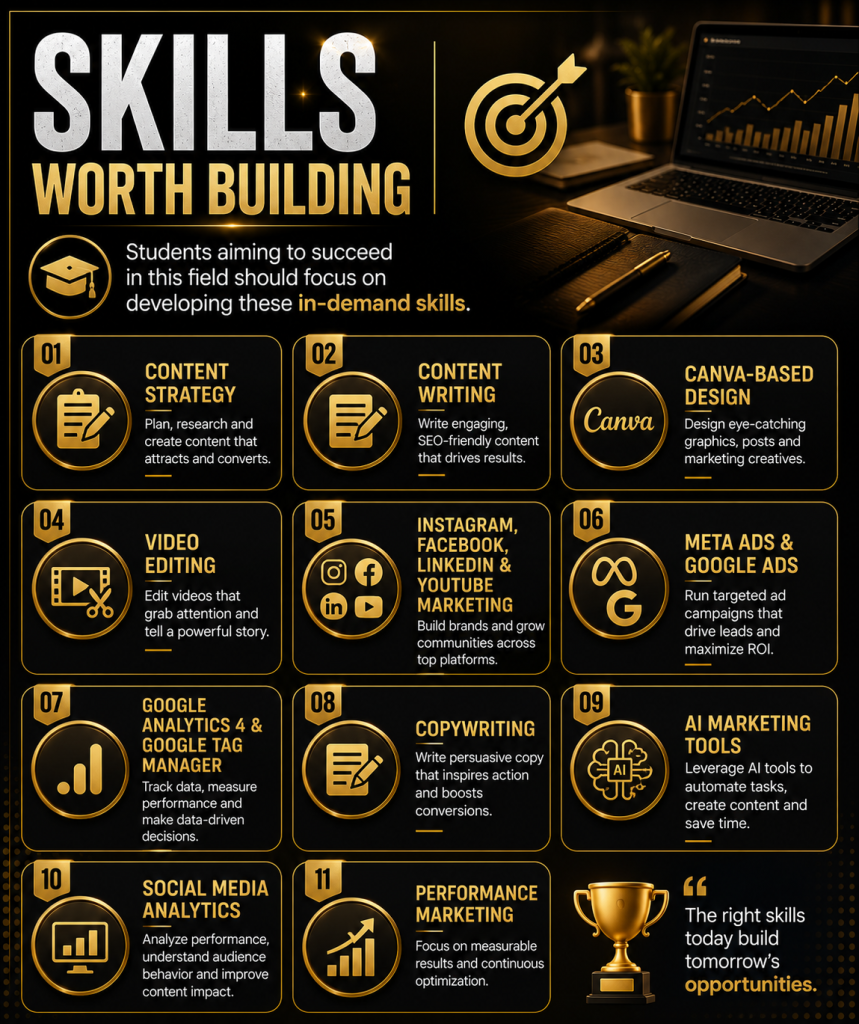
Together, these skills make a real difference in how competitive a candidate looks to employers.
Where This Can Lead
A solid grounding in social media marketing can lead toward roles such as:
● Social Media Executive
● Social Media Manager
● Content Creator
● Content Strategist
● Performance Marketing Executive
● Meta Ads Specialist
● Digital Marketing Executive
● Brand Manager
● Community Manager
● Influencer Marketing Specialist
● Digital Marketing Consultant
Beyond full-time roles, freelancing and agency work are also expanding quickly, giving marketers the
chance to work across multiple industries and clients at once.
Why Train With MBL Digital Marketing Academy
MBL Digital Marketing Academy is built around practical, job-ready training that keeps pace with
what the industry actually needs right now.The program covers:
● Social media strategy
● Meta Ads
● Instagram, Facebook, LinkedIn, and YouTube marketing
● Google Ads
● Google Analytics 4 (GA4) and Google Tag Manager (GTM)
● AI tools for marketing
● Canva and creative design
● Live projects
● Portfolio building
● Resume preparation
● Interview guidance
● Internship support
● Job assistance
The goal is simple: help students become confident, capable marketers who can plan, run, and
optimize real social media campaigns from day one.
Wrapping Up
Social media marketing keeps changing shape, and the people who stay current with these shifts are
the ones who’ll find the best opportunities. Between AI-assisted content, short-form video, in-app
shopping, influencer partnerships, and performance advertising, companies are clearly investing in
professionals who can show measurable results.
For students, there’s no better time to start building these skills. Understanding modern social media
marketing isn’t only about knowing the theory—it’s about developing hands-on ability that employers
genuinely value. Getting strong at content creation, analytics, paid campaigns, and AI-driven strategy
sets you up for a solid start in this field.
At MBL Digital Marketing Academy, training is built around live projects, practical tools, and real
industry demands. If becoming a skilled social media marketer is the goal, now’s the time to
start—and build a career that’s ready for what’s next.