
Digital marketing has become an important part of how businesses connect with customers, promote their products and grow online. From appearing on Google to reaching potential customers through Instagram advertisements, businesses use different digital channels to build their online presence.
For students who are interested in entering this industry, understanding how digital marketing works is the first step towards developing the right skills.
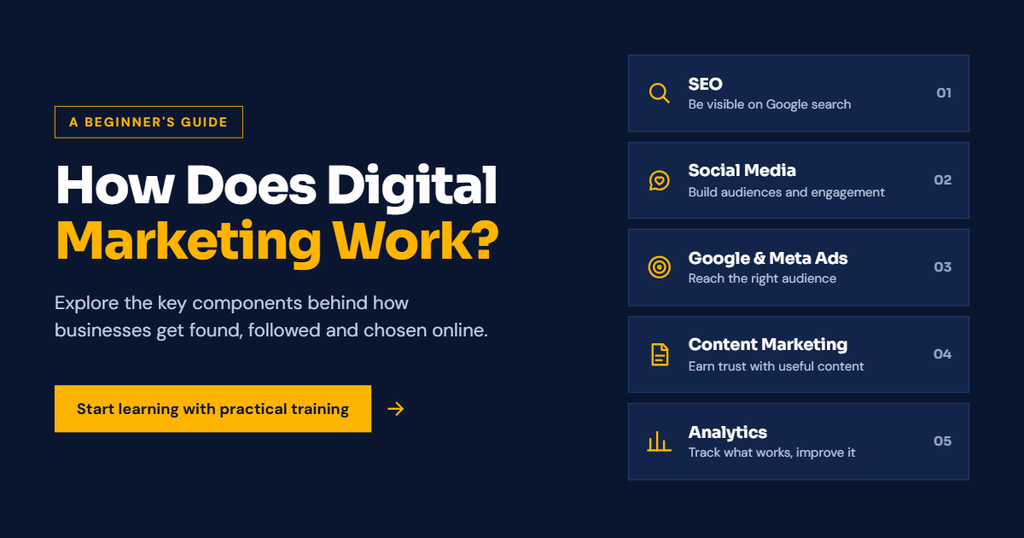
Let’s explore the major components of digital marketing and how they work together.
1. Search Engine Optimization (SEO)
Search Engine Optimization, commonly known as SEO, helps websites improve their visibility on search engines like Google. When people search for products, services or information, SEO helps relevant websites appear in search results.
It involves keyword research, content optimization, technical improvements, website structure and link building.
For example, when someone searches for a digital marketing institute in Hyderabad, a properly optimized website has a better opportunity to appear in relevant search results.
2. Social Media Marketing
Social media platforms such as Instagram, Facebook, LinkedIn and YouTube allow businesses to connect directly with their target audiences.
Social media marketing involves creating engaging content, planning posts, managing accounts, understanding audience behaviour and analysing performance.
Students can learn how businesses use social media to build brand awareness, increase engagement and develop relationships with potential customers.
3. Paid Advertising: Google Ads and Meta Ads
Businesses often use paid advertising when they want to reach specific audiences and generate enquiries.
Google Ads helps businesses display advertisements when users search for relevant products or services. Meta Ads allows advertisers to reach audiences across Facebook and Instagram based on factors such as interests, demographics and behaviour.
Understanding campaign objectives, audience targeting, budgets, ad creatives and performance metrics is essential for managing successful advertising campaigns.
4. Content Marketing
Content marketing focuses on creating useful and relevant information that attracts and engages an audience.
Blog articles, videos, infographics, social media posts and educational content are common examples.
For instance, a business offering educational services can publish informative articles to answer students’ questions and build trust before they make an enquiry.
Good content should provide value to readers rather than simply promoting a product or service.
5. Website Analytics and Performance Tracking
Digital marketing is not just about publishing content or running advertisements. It is also about understanding what works and what needs improvement.
Tools such as Google Analytics and Google Search Console help marketers understand website traffic, user behaviour, search performance and other important metrics.
For paid campaigns, marketers also analyse impressions, clicks, cost per lead and conversions to evaluate campaign performance.
These insights help businesses make better marketing decisions.
6. Why Should Students Learn These Digital Marketing Skills?
Learning digital marketing gives students an opportunity to understand how businesses operate in the online environment.
It also introduces them to different career paths, including:
- SEO Executive
- Social Media Executive
- Google Ads Specialist
- Performance Marketing Executive
- Content Marketing Executive
- Digital Marketing Analyst
However, understanding concepts alone is not enough. Students should also practise using marketing tools, work on practical assignments and understand how real campaigns are planned and managed.
7. Start Learning Digital Marketing with Practical Training
A structured learning approach can help beginners understand the different areas of digital marketing and develop skills step by step.
At MBL Digital Academy, students can explore essential digital marketing concepts through practical training, online and offline learning options, real-time internships and career support.
The Digital Marketing Course at MBL Digital Academy covers areas such as SEO, Google Ads, Meta Ads, social media management, content marketing, website designing and AI tools.
Students also get opportunities to develop practical knowledge and understand how digital marketing strategies are applied in real-world situations.
Conclusion
Digital marketing brings together multiple skills that help businesses build visibility, connect with customers and achieve their marketing goals. Understanding SEO, social media, paid advertising, content marketing and analytics can give beginners a strong foundation for entering this field.
If you are interested in developing these skills and exploring career opportunities in the industry, take the next step with MBL Digital Academy.
Visit MBL Digital Academy to explore the course, understand the training approach and take the first step towards learning digital marketing.