No coding. No fancy degree. Just a plan you can actually follow.
Somewhere between finishing college and staring at a blank job portal, almost every fresher asks
the same question: “Can I really pick up a skill in three months and get hired for it?” With digital
marketing, the honest answer is yes – but there’s a catch nobody tells you upfront. It only works if
you stop collecting course certificates and start doing the actual work: writing captions that sound
human, running a small ad campaign with your own five hundred rupees, reading analytics
dashboards until they stop looking like alien language.
That’s really the whole idea behind this guide. Not anot
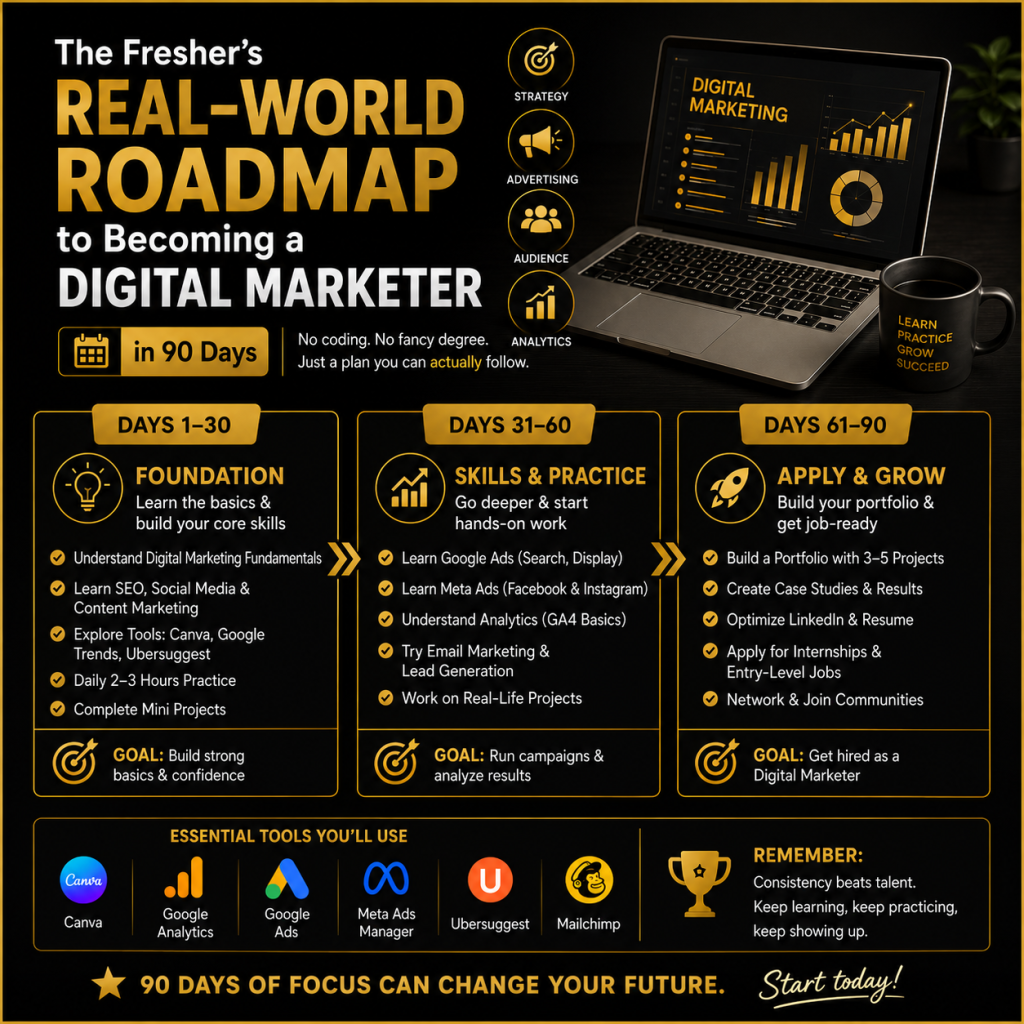
That’s really the whole idea behind this guide. Not another list of “top 10 digital marketing skills,”
but a day-by-day, month-by-month walk-through of what to learn, in what order, and how to prove
you learned it. Whether you studied commerce, engineering, an MBA, or took a break from work
altogether, none of that matters much here. What matters is whether you’re willing to sit down,
practice a little every day, and build something you can show an interviewer instead of just talking
about it.
Why Freshers Keep Choosing Digital Marketing
Every business with a phone number now needs someone who understands the internet – how to
get found on Google, how to keep an Instagram page from going stale, how to turn a curious
visitor into a paying customer. That demand hasn’t slowed down, and it’s spread across industries
that have nothing else in common: hospitals, real estate firms, D2C skincare brands, coaching
institutes, even your neighbourhood bakery.
A few reasons this field keeps pulling in freshers year after year:
• The demand cuts across almost every industry, not just tech
• There isn’t one fixed career path – you can specialise in SEO, ads, content, analytics, or stay a generalist
• A lot of the work can genuinely be done from home
• Freelancing and small side-projects are realistic even in your first year
• Your growth depends far more on results than on how many years you’ve “put in”
• You don’t need to write a single line of code to be good at it
Compare that to fields where you wait two or three years just to be trusted with real responsibility.
In digital marketing, you can be managing an actual ad budget – even a small one – within your
first few weeks of learning, simply because someone has to, and it might as well be you.
Get Your Mindset Right Before You Start
Here’s a mistake I’d bet nine out of ten beginners make: they try to binge the entire subject in a
week, watching one YouTube video after another, feeling productive, and ending up knowing a
little about everything and not enough about anything. Digital marketing isn’t one skill wearing a
trench coat – it’s several skills stitched together: writing, design sense, basic data reading, a bit of
psychology, and comfort with a handful of software tools.
So instead of cramming, treat these ninety days like a slow-cook recipe. One concept at a time,
followed immediately by practice, not eventually by practice. Your daily loop should roughly look
like this:
• Learn something new
• Try it with your own hands, right away
• Build a small piece of a portfolio out of it
• Look back at what worked and what didn’t
• Slowly stitch all of it into a body of work you can show off
Employers, at the end of the day, aren’t hiring your certificate PDF. They’re hiring someone who
can look at a struggling Instagram page or a stagnant website and say, “here’s what I’d try first.”
That instinct only comes from doing, not from watching.
Days 1-30: Getting the Fundamentals Into Your Bones
The first month isn’t about tools or dashboards yet. It’s about understanding why marketing
behaves the way it does – what makes a stranger click, stay, and eventually pay.
Start With the Basics Everyone Skips
Before jumping into SEO or ads, sit with the foundational ideas for a bit:
• What digital marketing actually covers, beyond the buzzwords
• The marketing funnel – awareness, interest, decision, action
• What a customer journey looks like from a stranger’s first click to their tenth purchase
• Buyer personas – and why guessing who you’re talking to wastes money
• Lead generation versus plain traffic
• What “conversion” really means for different kinds of businesses
• Branding, and why it’s more than just a logo

Most beginners rush past this section because it feels too “theoretical” to matter. It’s the opposite.
Every tool you’ll learn later – Google Ads, Meta Ads, GA4 – is just a more technical way of
answering these same basic questions. Skip this, and the tools will feel like buttons you’re clicking
blindly.
SEO – Learning to Get Found Without Paying for It
Search Engine Optimization used to be simpler: stuff a few keywords, get a few backlinks, rank. It
isn’t that simple anymore, especially with AI now sitting between the searcher and the website.
Cover these areas properly:
• Keyword research – finding what people are actually typing, not what you assume they type
• On-page SEO – titles, meta descriptions, headers, internal linking
• Off-page SEO – backlinks, mentions, digital PR
• Technical SEO – site speed, crawlability, mobile friendliness
• Local SEO – Google Business Profile, local citations, reviews
• AI search and Google’s AI Overviews – how answers are being pulled directly into search results now
• Generative Engine Optimization (GEO) – optimising so tools like ChatGPT and Gemini reference your content
• Answer Engine Optimization (AEO) – structuring content so it directly answers a question
Don’t just read about these – pick one blog post (yours or someone else’s, with permission) and
actually optimise it end to end. Notice how different “writing for Google” feels from just writing
normally.
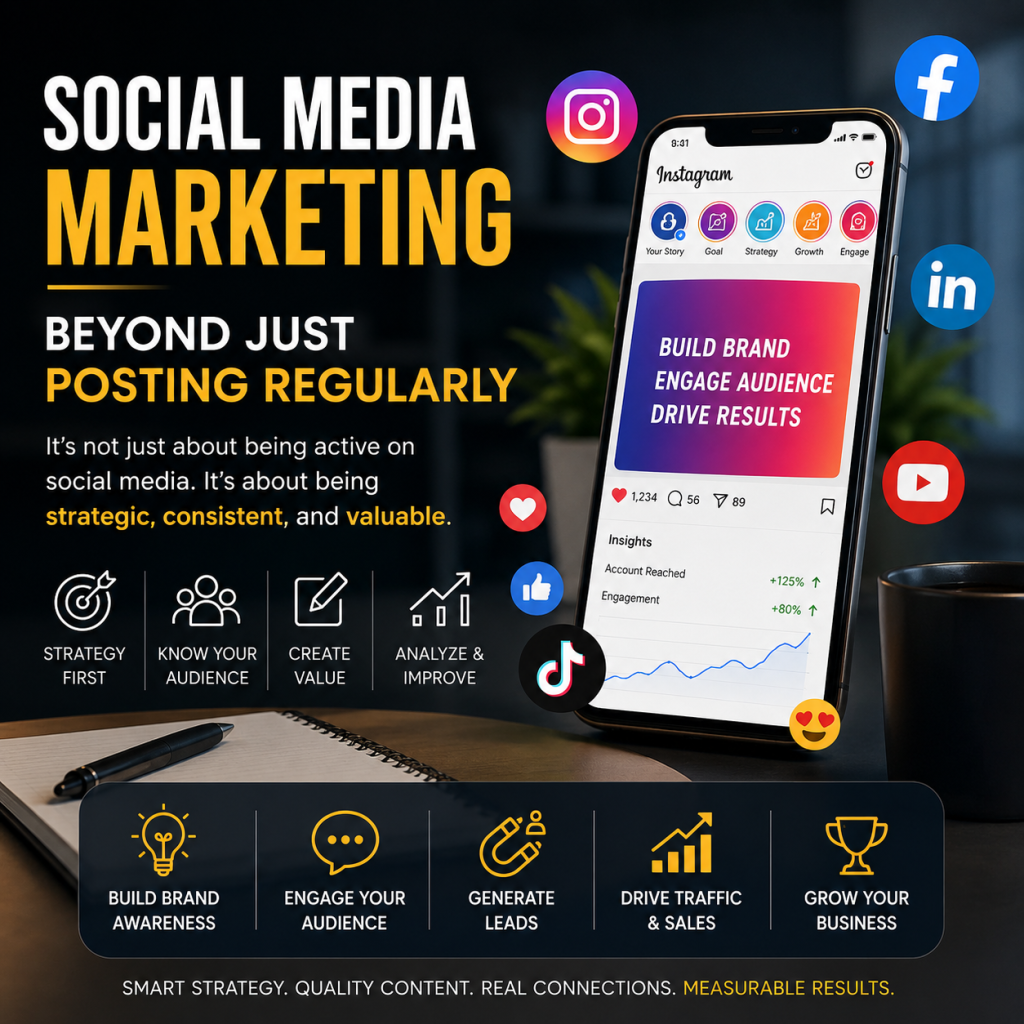
Social Media Marketing – Beyond Just Posting Regularly
Everyone thinks they understand social media because they use Instagram daily. Using a
platform and marketing on it are two very different skills. Focus on Instagram, Facebook,
LinkedIn, and YouTube, and get comfortable with:
• Building an actual content strategy instead of posting randomly
• Reels that hook attention in the first two seconds
• Carousels that keep someone swiping
• Hashtag research that isn’t just guesswork
• What genuinely drives engagement versus what just looks like it should
• Organic growth tactics that don’t rely on luck
Set up your own Instagram page around a niche you actually care about, and commit to posting
on it consistently. This single habit will teach you more about algorithms, engagement, and
consistency than any course slide ever could.
Content Marketing – Words Still Do Most of the Selling
No matter how good your design or targeting is, someone eventually has to write the words that
convince a person to act. Practice writing:
• Blog posts that are actually useful, not just keyword-stuffed
• Captions that sound like a person, not a brand robot
• Website copy that’s clear about what the business does
• Ad copy short enough to hold attention
• Emails people don’t immediately delete
Set yourself a target of one blog a week during this phase. It’ll feel slow and clunky at first – that’s
normal. By week four, you’ll notice you’re writing faster and thinking more like a marketer than a
student.
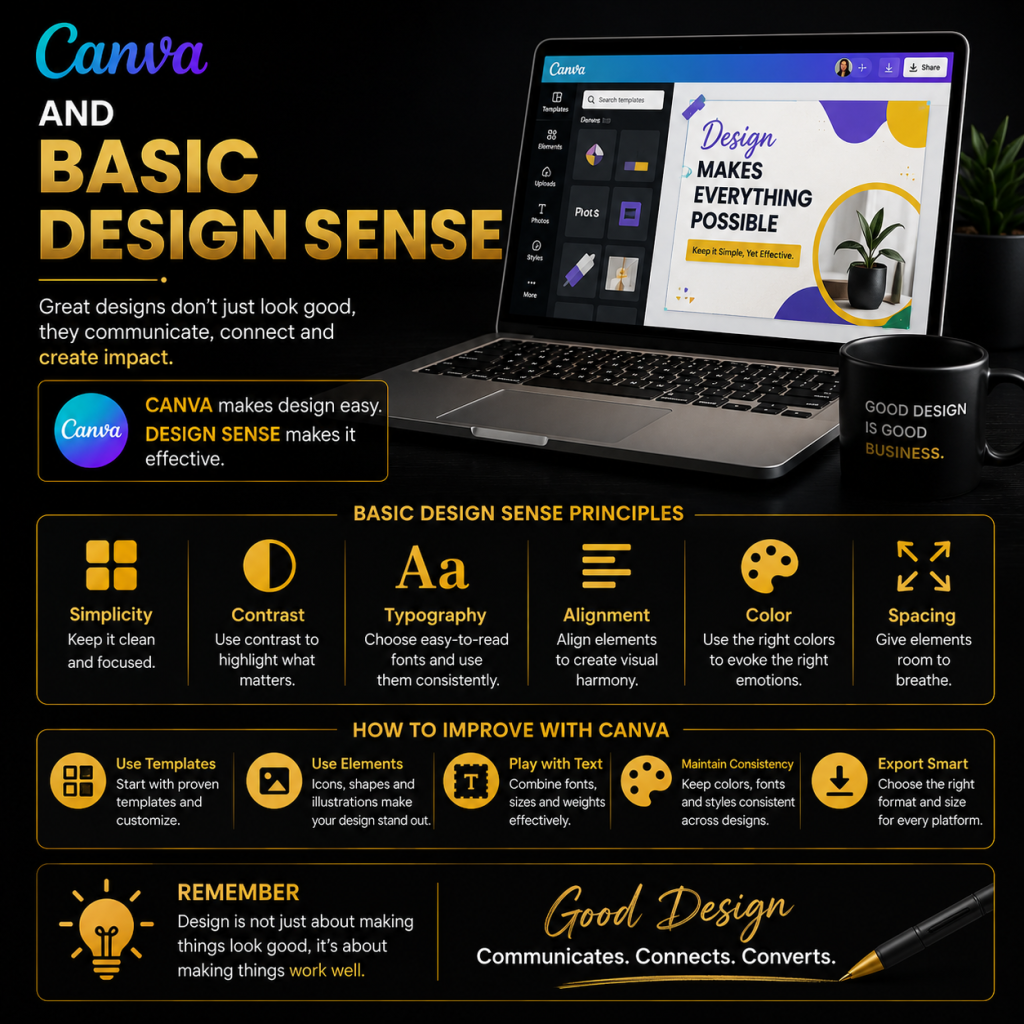
Canva and Basic Design Sense
You don’t need to become a designer, but you do need enough design sense to not embarrass
yourself in front of a client. Get hands-on with:
• Posters and static creatives
• Reel covers and thumbnails
• Carousel templates
• Story creatives for daily posting
Almost every entry-level digital marketing role expects at least basic Canva comfort, even if
design isn’t your main job. It’s simply too useful a skill to skip.
Days 31-60: Learning to Actually Run the Tools
Once the fundamentals feel natural, the second month is where things get technical – and
honestly, more fun. This is where you start touching the same dashboards professionals use
every day.
Google Ads
Learn how different campaign types serve different goals:
• Search campaigns – for people actively looking for something
• Display campaigns – for staying visible while people browse other sites
• Performance Max – Google’s automated, cross-channel campaign type
• YouTube ads – video-first advertising
Along with the campaign types, get genuinely comfortable with keywords and match types, CPC
(cost per click), CTR (click-through rate), and conversion tracking. These four terms alone will
come up in almost every marketing interview you sit for.
Meta Ads (Facebook and Instagram)
Practice building out different campaign objectives:
• Awareness campaigns – getting a brand noticed
• Traffic campaigns – pushing people to a website or landing page
• Lead generation campaigns – collecting contact details directly on the platform
• Sales campaigns – driving actual purchases

Then go a layer deeper: Meta Pixel setup, event tracking, custom audiences (people who’ve
already interacted with your brand), lookalike audiences (new people similar to your best
customers), and remarketing (bringing back people who almost converted but didn’t).
Google Analytics 4 (GA4)
If Ads and Meta Ads are about spending money well, GA4 is about knowing whether that money
actually worked. Get comfortable reading:
• Users – who’s visiting
• Sessions – how they’re browsing
• Events – what actions they’re taking
• Traffic sources – where they came from
• Reports – the summarised story of all of the above
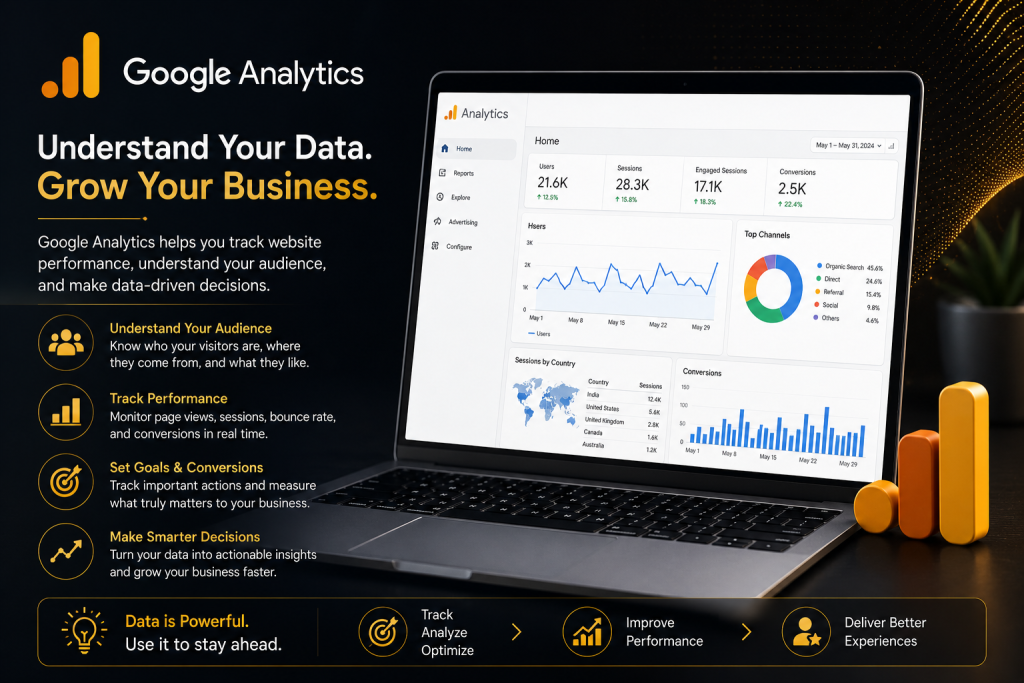
A marketer who can’t read analytics is a marketer guessing in the dark. This is one of the least
glamorous parts of the roadmap and also one of the most valuable to employers.
Google Tag Manager
Tag Manager sits quietly behind almost every serious tracking setup. Learn to install tags and set
up tracking for button clicks and form submissions. It sounds technical on paper, but once you set
up your first tag correctly and watch the data flow in, it clicks fast.
Email Marketing
Email is older than social media and still refuses to die – mostly because it works. Get practical
experience with platforms like Mailchimp or Brevo, and understand email automation, welcome
sequences, and promotional campaigns. Set up a small automated welcome series for a dummy
business just to see how the logic flows.
AI Tools Worth Learning as a Fresher
Marketers today lean on AI constantly, not as a replacement for thinking but as a way to move
faster. Worth getting familiar with:
• ChatGPT and Gemini – for brainstorming and drafts
• Claude – for writing and analysis
• Canva AI – for quick design assistance
• Perplexity – for research
• Grammarly – for polishing writing
• Notion AI – for organising your work and notes
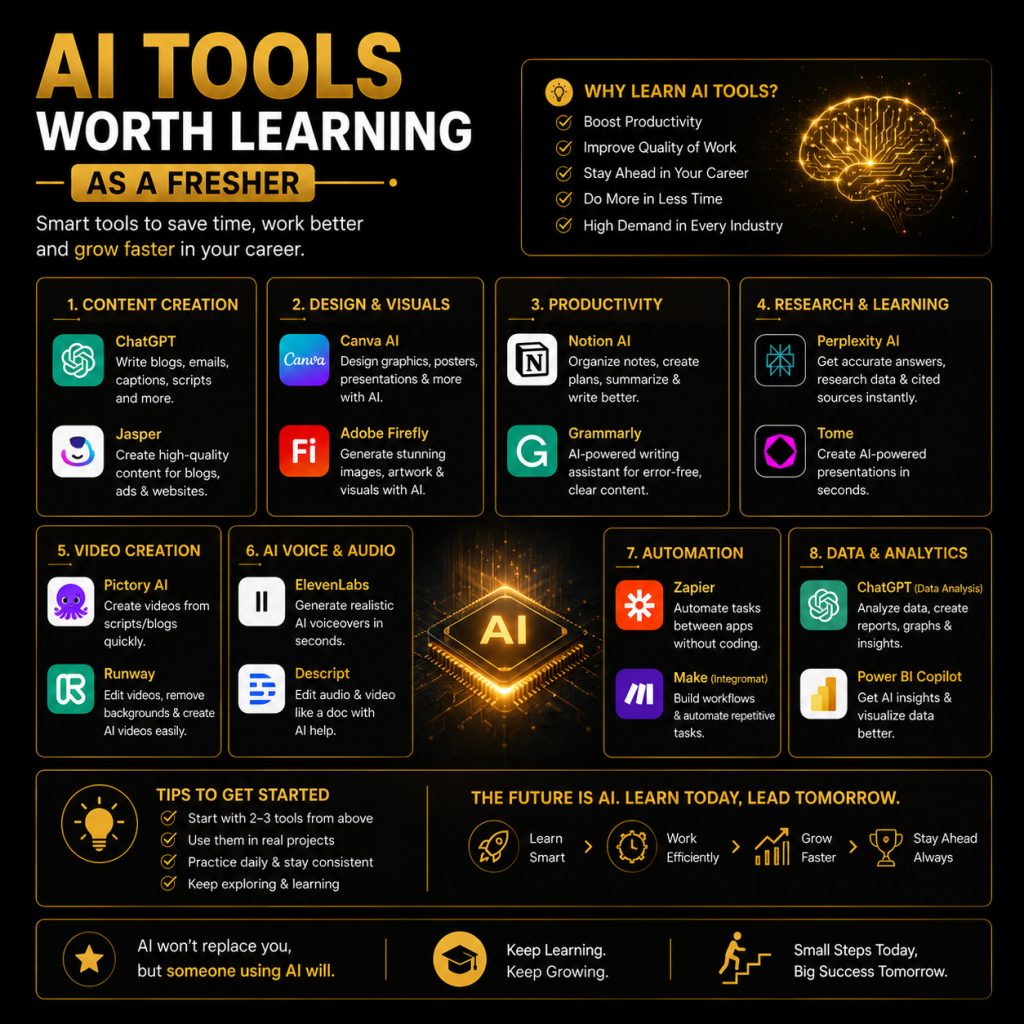
The line to remember here: use AI to move faster, not to think for you. Employers can tell the
difference between AI-assisted work and AI-generated laziness fairly quickly.
Days 61-90: Where the Real Experience Gets Built
This final stretch is, honestly, the phase that decides whether the previous sixty days actually turn
into a job. No interviewer really cares which course you finished. What they want to know is what
you built with what you learned.
Build an Actual Portfolio
Put together:
• A simple personal website
• Five SEO-optimised blogs
• Twenty social media posts
• Ten short-form videos or reels
• Sample Meta ad creatives
• Mock Google Ads campaigns
• A few landing page concepts
None of this needs to be for a paying client at first. A well-thought-out practice project,
documented properly, is often more convincing in an interview than a vague mention of “I did an internship.”
Turn Your Practice Into Case Studies
Documentation is what separates someone who “did some work” from someone who can explain
their thinking. Take a simple example:
Project: Local Café
• Created a month of Instagram content
• Improved engagement through better hooks and captions
• Ran a sample lead-generation campaign
• Designed matching creatives for posts and stories
• Wrote ad copy for two different audience segments
Even a practice project like this, written up properly with what worked and what you’d change next time, shows an employer how you think – not just what buttons you clicked.
Build a LinkedIn Presence, Not Just a Profile
Recruiters actively search LinkedIn for fresh talent, and an empty profile with just your college
name does nothing for you. Share your learning journey, certifications, project links, blog posts,
and the occasional industry insight or opinion. It doesn’t need to be polished – it needs to be
consistent.
Try Freelancing, Even in a Small Way
Offer your (still-developing) skills to local businesses, a friend’s small business, an early-stage
startup, an NGO, or a neighbourhood shop. Even one real client, however small the project,
changes how your resume reads. “Managed Instagram for a local café for two months” carries far
more weight than “completed a digital marketing certification.”
Get Genuinely Ready for Interviews
Practice explaining, out loud and in your own words, answers to questions like:
• What is SEO, and why does it matter?
• What’s the difference between SEO and SEM?
• What is CTR, and what’s considered a good one?
• What is CPC, and how does it affect budget?
• How does the Meta Pixel actually work?
• What can Google Analytics tell a business owner?
• How would you generate leads online for a small business?
Confidence in an interview doesn’t come from memorising definitions – it comes from having
actually done the thing the question is asking about.
A Simple Daily Routine (No Ten-Hour Study Days Required)
You don’t need to burn yourself out to make this roadmap work. A realistic daily split looks
something like:
• 1 hour – learning a new concept
• 1 hour – practicing with an actual tool
• 30 minutes – reading industry blogs or news
• 30 minutes – creating content or working on your project
That’s three hours a day. Consistency across ninety days will beat a handful of exhausting twelve-hour marathons followed by a week of burnout, every single time.
Mistakes That Quietly Slow Freshers Down
A few habits worth watching out for, because they’re easy to fall into without noticing:
• Watching tutorial after tutorial without ever opening the tool yourself
• Chasing certificates instead of building projects
• Treating SEO fundamentals as “boring” and skipping them
• Never actually building a portfolio
• Avoiding LinkedIn because it feels awkward
• Letting AI write everything instead of using it as a starting point
• Giving up somewhere around week three, right when things start feeling repetitive
None of these mistakes are fatal on their own. The problem is that they compound quietly – three months later, you look back and realise you “learned” a lot but built almost nothing.
What Employers Are Actually Screening For
Companies today expect more than a checklist of tools you’ve used. They’re looking for people
who can:
• Create content that actually engages people
• Understand customer behaviour, not just campaign settings
• Run at least basic ad campaigns independently
• Read performance data and draw conclusions from it
• Explain their ideas clearly, without jargon overload
• Pick up new tools quickly as platforms keep changing
• Approach marketing problems with some creativity, not just a template
Soft skills – communication, curiosity, the willingness to keep learning – matter just as much as the
technical checklist here. In fact, in interviews, they’re often what tips the decision one way or the
other between two similarly-skilled candidates.
Your 90-Day Checklist
By the end of this roadmap, you should realistically be able to check off:
✓ Learned digital marketing fundamentals
✓ Understood SEO basics thoroughly
✓ Learned Google Ads
✓ Learned Meta Ads
✓ Understood Google Analytics (GA4)
✓ Practiced with Google Tag Manager
✓ Created a personal portfolio
✓ Published at least 5 blogs
✓ Designed 20+ social media posts
✓ Created 10+ short-form videos
✓ Optimised your LinkedIn profile
✓ Completed relevant certifications
✓ Built 2-3 real or practice case studies
✓ Applied for internships and entry-level roles
Final Thoughts
Becoming job-ready in digital marketing within ninety days is genuinely possible – but it was never
about finishing a course quickly. It’s about showing up daily, practicing even when it feels
repetitive, and slowly building a body of work that speaks for itself before you even open your
mouth in an interview.
Every experienced digital marketer you’ll ever meet started exactly where you are right now –
unsure, a little overwhelmed, wondering if any of this would actually work out. The ones who
made it through weren’t necessarily the most naturally talented. They were the ones who stayed
consistent, kept adapting as tools and algorithms changed, and treated every small project as
practice for a bigger one.
The field itself isn’t slowing down either – AI, automation, and data are reshaping how marketing
gets done, which means there’s more room, not less, for freshers willing to adapt quickly. Start
today. Stay a little stubborn about showing up daily. Three months from now, look back at day one
and notice just how far you’ve actually come.