
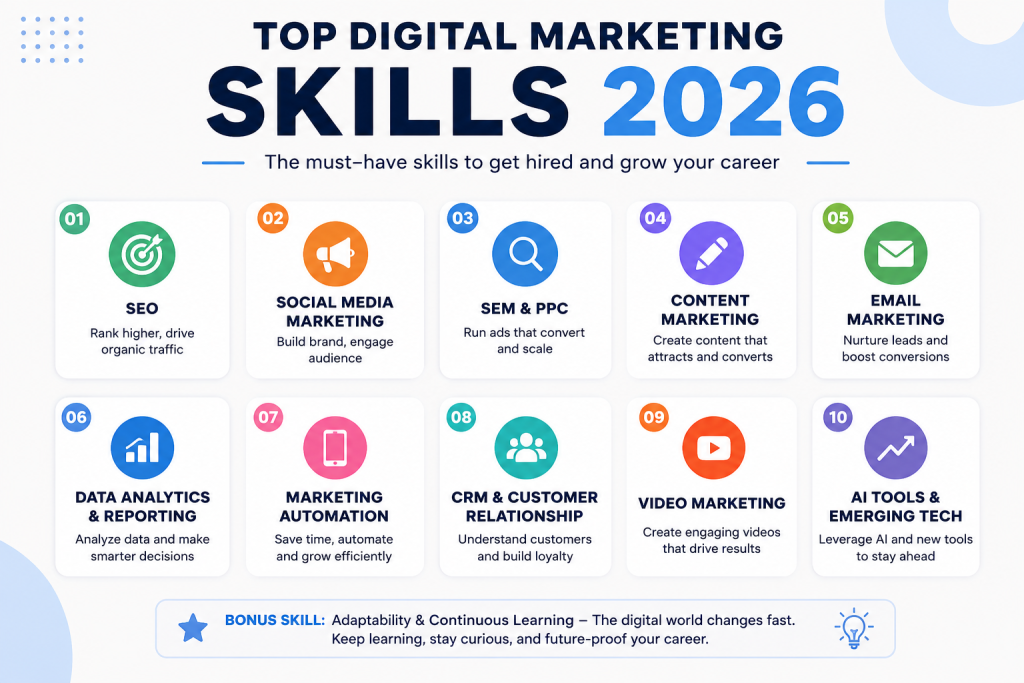
A straight-talk guide to the six skills worth your time — plus where MBL Digital Academy can help you get there.
Ask ten people what digital marketing means and you’ll get ten slightly different answers. Here’s the simplest way to put it: it’s the craft of getting a brand in front of the right eyes online through search engines, social apps, inboxes, video platforms and turning that attention into paying customers.
Every business needs this now. Not just tech companies. Not just big brands. A neighborhood bakery running its first Instagram promo needs it just as badly as a billion-dollar company does. That’s why openings in this field never really dry up.
But here’s the catch — just “knowing digital marketing” in a vague sense won’t get you hired. What gets you hired is depth in one or two areas that companies actually need filled. That’s what this guide walks through.
The Industry Has Changed — Here’s What’s Different Now
AI walked into the marketing world and rearranged the furniture. But contrary to what a lot of people feared, it didn’t replace marketers — it just raised the bar for what “skilled” means.
Today’s employers aren’t choosing between someone who’s creative and someone who’s tech-savvy with AI tools. They want one person who’s both. If you can strategize and move fast using AI as a tool, you’re exactly who companies are trying to hire.
And here’s something worth noting: a resume full of certifications doesn’t carry the same weight it used to. What actually gets attention is demonstrated, hands-on ability — which is a big reason why practical training routes, including academies like MBL Digital Academy, have become such a common starting point for newcomers.
With that context out of the way, let’s get into the six areas worth focusing on.
1. SEO — Still the Backbone of Organic Growth
Search Engine Optimization hasn’t lost a step. If anything, it’s grown more complex — and more valuable — thanks to AI search summaries and voice assistants entering the mix alongside traditional Google rankings.
Why does it matter so much? Because it’s the one channel that keeps generating traffic without you paying for every single click. Over time, that translates into more trust, more leads, and a lower overall marketing spend.
To be genuinely useful in this area, you’d want to get hands-on with: keyword research, decoding search intent, on-page fixes, the more technical backend side of SEO, local search optimization, refining existing content, building backlinks, and — increasingly — shaping content so AI-driven search engines pick it up too.
Businesses will always chase free, sustainable traffic. That’s exactly why SEO specialists rarely sit unemployed for long.
2. Meta Ads — Precision Targeting at Scale
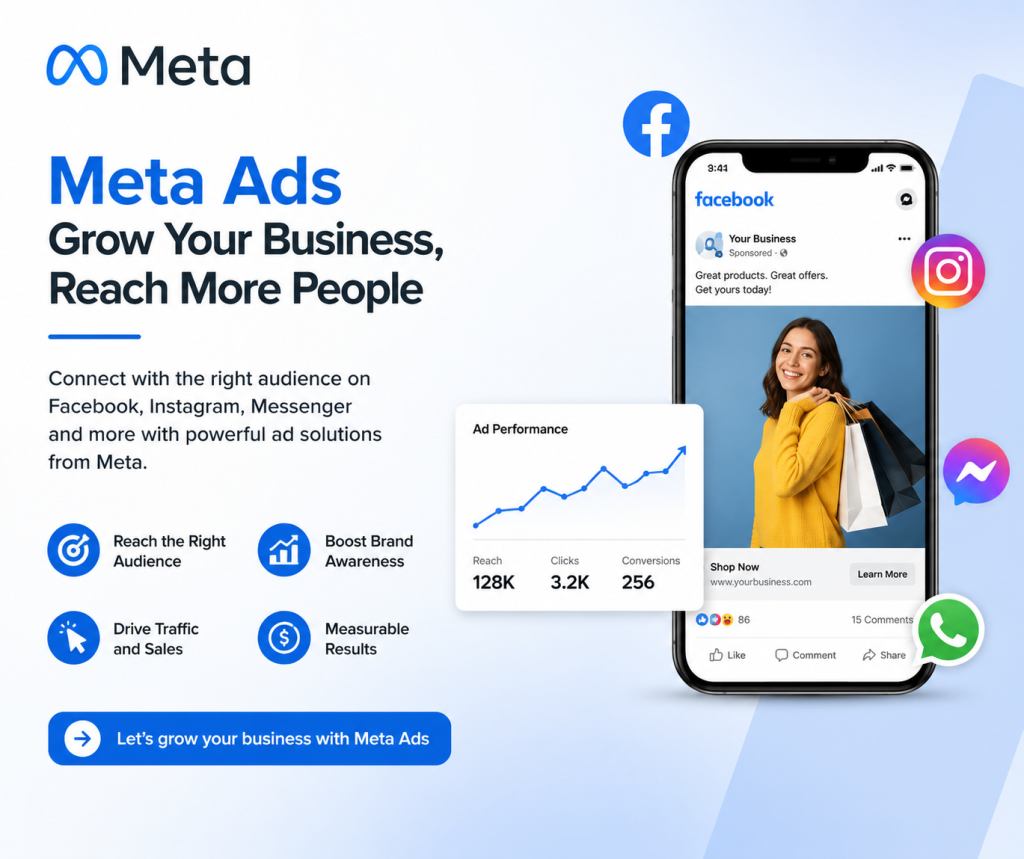
Facebook and Instagram advertising is still one of the sharpest tools available for reaching a very specific slice of an audience and converting them.
The appeal is obvious: better-qualified leads, a direct bump in sales, wider brand visibility, and the ability to slice your audience into incredibly narrow segments.
Getting good at this means learning campaign architecture, audience targeting, setting up and reading the Meta Pixel, conversion tracking, budget management, running A/B tests, interpreting performance data — and don’t skip creative strategy. A technically flawless campaign paired with a forgettable ad still underperforms.
3. Google Ads — Catching Buyers at the Exact Right Moment
What sets Google Ads apart from most other channels is timing — you’re reaching someone while they’re actively searching for what you sell. That’s a fundamentally different kind of intent than social media browsing, and it’s why this skill continues to command strong salaries.
Worth learning here: search campaigns, Performance Max, display ads, YouTube advertising, keyword planning, conversion tracking, tying everything back to Google Analytics, and optimizing toward ROAS.
Marketers who can run a lean, profitable Google Ads account are consistently near the top of hiring lists everywhere.
4. Content Marketing — Where Trust Actually Gets Built
Every good marketing plan rests on content. And here’s the twist — AI hasn’t devalued this skill, it’s made authentic human writing stand out even more, precisely because audiences can spot the difference.
This covers copywriting, blogging, storytelling, email campaigns, landing pages built to convert, and the broader work of planning a content strategy and calendar.
Done well, content quietly does three jobs at once: it helps your SEO, it builds credibility, and it nudges readers closer to a purchase.
5. Working Fluently With AI Tools
This isn’t optional anymore — it’s assumed. The real differentiator is whether you can use AI tools to move faster without losing your own judgment and creative instincts in the process.
Familiarize yourself with tools like ChatGPT, Google Gemini, Claude, Canva AI, Adobe Firefly, Midjourney, and AI-based analytics platforms.
The mindset that works best: treat AI as a highly efficient assistant, not a replacement for your thinking.
6. Video Editing & Short-Form Content
Attention has shifted hard toward short videos — Reels, Shorts, and quick-cut TikTok-style clips are consistently outperforming longer formats on engagement.
Skills worth building: basic editing, writing hooks that stop the scroll, short-format storytelling, motion graphics, captions, sound design, and a repeatable strategy for producing this content consistently.
Getting fluent with CapCut, Adobe Premiere Pro, Canva, and DaVinci Resolve will noticeably widen your job options in this space.
Skills Alone Won’t Get You Hired — Proof Will
Here’s the uncomfortable truth: knowing these skills in theory means very little to a recruiter. What actually moves the needle is a portfolio of real, tangible work.
This is where structured, project-based learning the kind offered at places like MBL Digital Academy tends to pay off. Good training doesn’t stop at explaining concepts; it puts you on live projects you can genuinely showcase afterward, not just a certificate that says you attended.
A few ways to build that proof:
- Launch and run your own WordPress site
- Publish blog content that’s actually SEO-optimized
- Run a small, real Meta Ads campaign
- Manage a live Google Ads account, even a modest one
- Post Instagram Reels or YouTube Shorts consistently
- Turn your projects into documented case studies
None of this needs to be flashy it just needs to be real and something you can walk a recruiter through.
Common Questions People Ask
Is this still a solid career path in 2026? Yes hiring across this field continues to grow, and companies of every size need people who can run these channels well.
Which of these skills is in the highest demand? SEO, Google Ads, Meta Ads, AI tool fluency, and short-form video creation are the five that show up most often in job postings.
Can a complete beginner land a role? Yes, genuinely. Freshers who put in real work, build a few honest projects, and can speak to them confidently have a real shot at entry-level positions.
Is coding required? No. A little HTML knowledge helps occasionally, but it’s not a baseline requirement for most digital marketing jobs.
The Takeaway
This field keeps creating opportunities for students, career-switchers, freelancers, and small business owners alike. You don’t need to master all six skills at once. Pick two or three that genuinely interest you, get real practice through actual projects, and let your portfolio grow from there.
The people who’ll come out ahead are the ones combining genuine creativity with data-informed decisions, while using AI as leverage rather than treating it as competition.
If you’d rather not stitch this together from scattered tutorials on your own, a guided program through MBL Digital Academy can shortcut a lot of that trial-and-error with real mentorship and hands-on project work. Either way pick a direction, start building, and let the results do the talking.